
Judge Tells HUD It Can't Override Congress With a $1.3 Billion Homelessness Set-Aside
The ruling also strikes a rule that could dock points from local groups for opposing encampment sweeps. HUD Secretary Scott Turner said it disrupts $4 billion days before awards. Some HUD scoring rules survived.
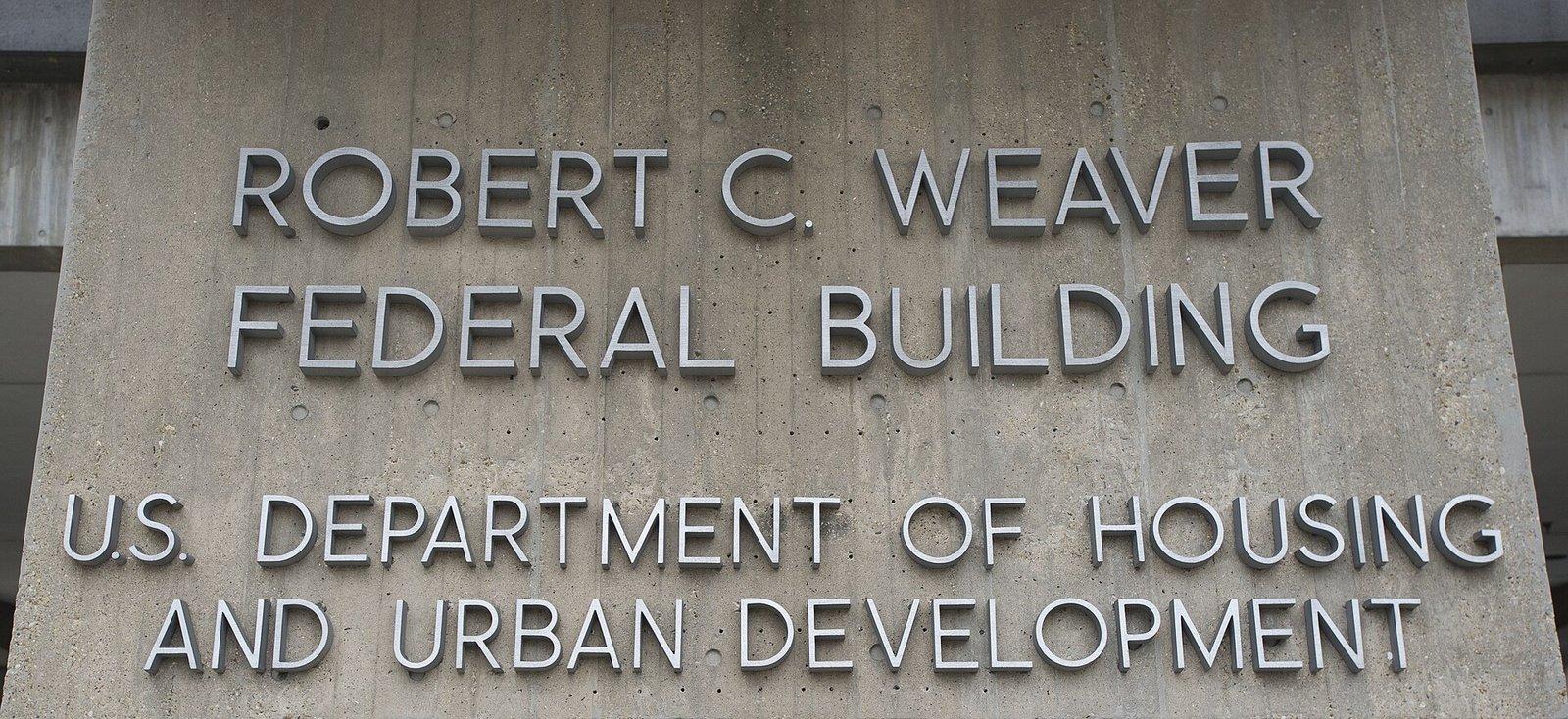
A federal judge on Friday struck down the housing department's plan to reserve $1.3 billion, roughly a third of a $4 billion homelessness grant program, ruling the agency can't override rules Congress wrote.
U.S. District Judge Mary S. McElroy in Rhode Island ruled that the Department of Housing and Urban Development, or HUD, couldn't reserve that money for transitional housing, services-only programs and new projects, ahead of existing permanent-housing projects.
Twenty states, the District of Columbia, advocacy groups and cities like Boston had sued. The law sets a Dec. 1 award deadline, and existing grants begin expiring Jan. 1.
At stake is who controls federal spending: Congress wrote mandatory scoring factors into the law. Judge McElroy found HUD used a catch-all clause to get around them in its drive to overhaul Housing First, a model built around permanent housing. She also struck a rule she found penalizes local groups' speech.
The money math
Congress gave the Continuum of Care program, which funds local networks of nonprofits and governments, a little over $4 billion in its 2026 spending law. HUD's June rulebook earmarked $1.3 billion of it, roughly one dollar in three. The states called that a "De Facto Cap" that, they argued, limits permanent housing to about 68% of the money.
"Although Congress delegated to the Secretary the power to create additional criteria for awarding funds, this residual clause cannot be read as allowing HUD to nullify the other congressionally established mandatory factors," Judge McElroy wrote.
HUD's best case
HUD pointed to a clause letting the secretary add "such other factors" deemed appropriate. It argued that set-aside projects would still be scored under Congress's required factors.
HUD Secretary Scott Turner said in a statement that the ruling "disrupts $4 billion for our most vulnerable, just days before funding awards were set to be made," Reuters reported. "Under President Trump, HUD is no longer in the business of throwing taxpayers’ money at a status quo that has repeatedly failed America’s most vulnerable," Mr. Turner added, according to Reuters.
The judge ordered HUD to reopen applications for the second tier of grants, a national competition. HUD warned that rerunning that round could leave funding gaps when grants expire Jan. 1. Judge McElroy found a delay of up to 30 days "should have minimal impact," because awards from the reopened competition will be finished before then.
The U.S. Court of Appeals for the First Circuit paused her earlier ruling against HUD in September; it later vacated that ruling after the plaintiffs dropped the claim it rested on. But she wrote that the pause "did not resolve the question of HUD’s authority to establish the Set-Aside." Reuters noted she is "a Trump appointee who was first nominated by Democratic President Barack Obama."
Points for staying quiet
One scoring rule, worth up to 14 of 130 points, or nearly 11% of a network's score, rewarded networks that don't "interfere with or impede local efforts" to clear tents and encampments. HUD said the rule keeps groups from interfering with police.
"A condition that penalizes a recipient’s views expressed outside the funded program does not define the program’s scope," Judge McElroy wrote. She held that the rule violates the First Amendment, finding it "penalizes opposition to particular policies."
What fell and what survived
In the nonprofits' case, she struck HUD's scoring against harm reduction, such as needle exchanges, and its drug-policy limits on groups' work outside funded projects. A key claim in HUD's supporting memo came from "not a scientific publication, but an Executive Order (No. 14367)," she wrote.
HUD defined self-sufficiency, drawing on the Oxford English Dictionary, as "the ability to meet basic needs, including a place to live, without public or private assistance." The judge struck it, ruling that it disfavors projects whose clients use Medicaid and other aid Congress tells HUD to promote.
She also struck unexplained conditions requiring grantees to follow a list of executive orders, and voided White House budget office footnotes tying this program's money to two executive orders. "The Court is not prepared to create this loophole," she wrote of shielding them from challenge.
Points for requiring clients to join services fell too, because HUD didn't consider domestic violence providers, many of whom take other federal grants that bar mandatory services. But the judge upheld points for investing in services, partnering with treatment providers and offering sober housing, writing that she "cannot say" they are "arbitrary and capricious," the legal label for unreasoned agency choices. Points for outreach teams that cooperate with police also survived.
What happens next
A compliance report is due Nov. 25. First-tier awards, the locally ranked projects covering at least 60% of each network's renewal funding, are due Dec. 1. The reopened second-tier competition closes that night. Second-tier awards are due Dec. 31, and a final report signed under penalty of perjury is due Jan. 8. Mr. Turner said HUD reserves the right to appeal, Reuters reported.
The libertarian take
Opinion, from a libertarian perspective.
Libertarians doubt Washington belongs in the homelessness business at all. But if Congress spends $4 billion on it, the rules Congress wrote should govern, not a policy preference slipped in through a catch-all clause.
The speech rule was worse. Docking a local network's score for opposing encampment sweeps outside the program turns federal money into a leash on political opinion. Mr. Turner may be right that the status quo has failed. The fix is to change the law or shrink the program. Rewriting the scoring in a funding notice skips Congress.
Sources
- U.S. District Court for the District of Rhode Island, Memorandum and Order, National Alliance to End Homelessness v. HUD and Washington v. HUD (Nov. 20, 2026)
- GovInfo, U.S. Courts opinions, National Alliance to End Homelessness v. HUD, No. 1:26-cv-00436 (D.R.I.)
- National Alliance to End Homelessness, release and plaintiffs' joint statement on the ruling (Nov. 20, 2026)
This article was written by AI from a libertarian perspective and checked against the primary sources linked above. Our standards