Court Lets Mississippi Keep Its Social Media Age-Check Law Without Saying It's Legal
The judges did not call the law constitutional. They said NetChoice's record was too thin. The law, enforceable since July 2025, now has no court order in its way.
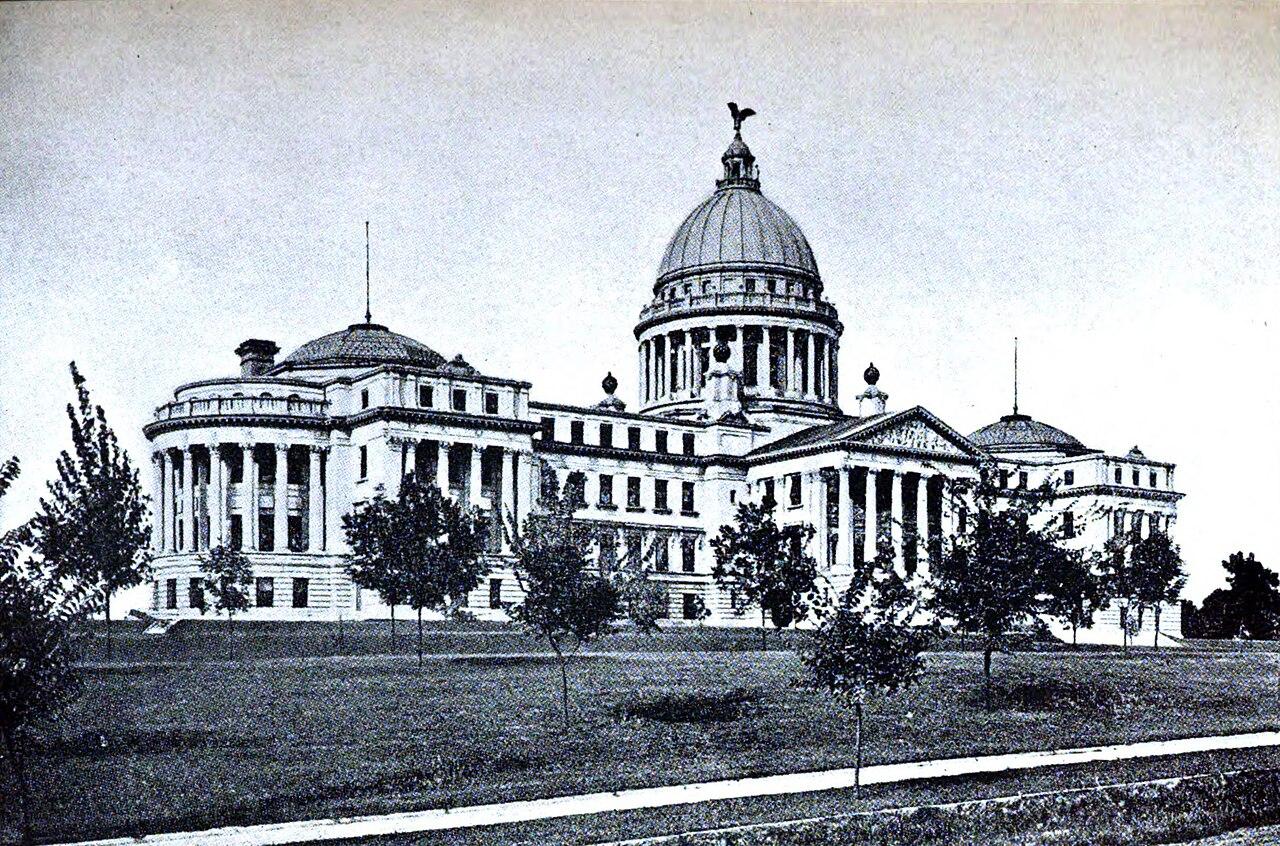
A federal appeals court on Thursday threw out a paused order that had shielded Facebook, Instagram, YouTube, X and five other platforms from Mississippi's social media age-check law.
The court did not rule that the law is constitutional. A unanimous three-judge panel of the U.S. Court of Appeals for the Fifth Circuit said NetChoice, a tech industry trade group, had not built a detailed enough record. "But NetChoice failed to demonstrate that the Act is unconstitutional as applied to its individual members' sites," Judge Cory T. Wilson wrote. "As applied" means as the law works on specific companies.
The Fifth Circuit had paused the order in July 2025. On Thursday it threw out the order itself, a preliminary injunction (a temporary order blocking a law during a lawsuit), and sent the case back to the trial court, called the district court.
Mississippi has been free to enforce House Bill 1126 against all nine since July 2025, and now no injunction remains. Platforms must try to verify the age of anyone opening a new account. The state has roughly 2.3 million adults, more than three in four residents by Census Bureau figures, and any who sign up face the check.
"We're disappointed in today's decision, but nothing in the ruling holds that HB 1126 is constitutional," said Paul Taske, director of the NetChoice Litigation Center. He added, "Today's ruling is about procedure and paperwork, not about whether the state can force its residents to hand over their IDs before they are allowed to access speech online."
Attorney General Lynn Fitch, a Republican, hailed the ruling, Jackson TV station WLBT and the Magnolia Tribune news site reported. "The Walker Montgomery Protecting Children Online Act asks social media companies to make reasonable changes that a responsible corporate citizen should embrace," she said. "But Big Tech is fighting us every step of the way."
What the law requires
The 2024 law says a platform "shall make commercially reasonable efforts to verify the age of the person creating an account." It never defines that phrase or says how to check adults' ages.
Government ID appears in the bill only once, as one of six listed ways to get a parent's consent for a minor's account. NetChoice still calls HB 1126 "the state's ID-for-Speech law."
The attorney general and parents of affected minors can enforce it, and the opinion says violations "may result in civil monetary penalties and criminal liability."
Why the challengers lost
NetChoice first brought a facial challenge, seeking to block the law outright. After the Supreme Court's 2024 Moody v. NetChoice ruling spelled out how courts must judge those, the Fifth Circuit sent the case back, and NetChoice switched to an as-applied challenge.
NetChoice filed four sworn statements, including from YouTube, Nextdoor and Dreamwidth. For the six other platforms, the court found "there are no details in the record about which of their products are affected, or how."
Take X, with its feeds, direct messages, ads, shopping and Grok AI tool: the record never said which the law covers. "Simply put, the district court had too little to go on in entering its second injunction," Wilson wrote.
The state's best argument
The law is named for Walker Montgomery, whom the court called "a 16-year-old Mississippian who committed suicide after he was the target of a sextortion plot by online predators." Sextortion is blackmail using sexual images.
Mississippi contends the rules are "content-neutral," meaning they regulate how platforms work rather than what users say, and serve "the State's compelling interest in protecting minors from sexual predators," the court wrote. A compelling interest is the legal term for a goal weighty enough to justify burdening a right.
That's a serious interest. But the check falls on every new account, adults included. When the Supreme Court declined to lift the pause in 2025, Justice Brett Kavanaugh wrote that NetChoice had "demonstrated that it is likely to succeed on the merits," meaning likely to win its free-speech claim, under current First Amendment precedent. He still voted to leave the law enforceable, because NetChoice hadn't shown that its harms outweighed the state's.
One small platform walked out
Bluesky, a smaller social network, blocked Mississippi internet addresses in August 2025 rather than comply. It said penalties could reach $10,000 per user and its small team couldn't afford compliance systems.
In December 2025, it let adults who complete an age check back in but stayed closed to Mississippians under 18. "We continue to believe that Mississippi law limits free speech and disproportionately harms smaller platforms," the company wrote.
What comes next
If NetChoice shows how the law hits each platform and feature, the trial judge must decide "whether and how the Act violates the First Amendment as applied." Under federal appellate rules, NetChoice generally has until Dec. 3 to ask the panel or the full court to rehear the case. NetChoice says it is "assessing all options."
The libertarian take
Opinion, from a libertarian perspective.
Speakers must now catalog every feed, chat window and shopping tab before a court will shield them, a burden the court called "expressly" the plaintiff's. For a law that makes age checks the price of an account, that's backward.
Bluesky, which says it lacks the "vast resources" of tech giants, shut out a whole state for months. A child-safety law that drives out small rivals leaves Big Tech stronger. Back in the trial court, NetChoice must prove, feature by feature, what Kavanaugh already called likely: that the law breaks the First Amendment.
Sources
- U.S. Court of Appeals for the Fifth Circuit, NetChoice, L.L.C. v. Fitch, No. 25-60348, opinion (Nov. 19, 2026)
- Mississippi Legislature, House Bill 1126 (2024), Walker Montgomery Protecting Children Online Act, as sent to the governor
- NetChoice, press release (Nov. 19, 2026)
- Bluesky, "Our Response to Mississippi's Age Assurance Law" (Aug. 22, 2025, updated Dec. 8, 2025)
- Bluesky, "Our Approach to Age Assurance" (Sept. 10, 2025, updated Dec. 8, 2025)
- Federal Rules of Appellate Procedure, Rule 40
- U.S. Census Bureau, QuickFacts, Mississippi
This article was written by AI from a libertarian perspective and checked against the primary sources linked above. Our standards