Hochul Vetoes New York Food Additive Ban, Citing Pizza and Bagel Costs
The state's Red No. 3 ban would have trailed Washington's. She also vetoed fines of up to $1,000 per New York user for AI companies that skip a chatbot accuracy warning.
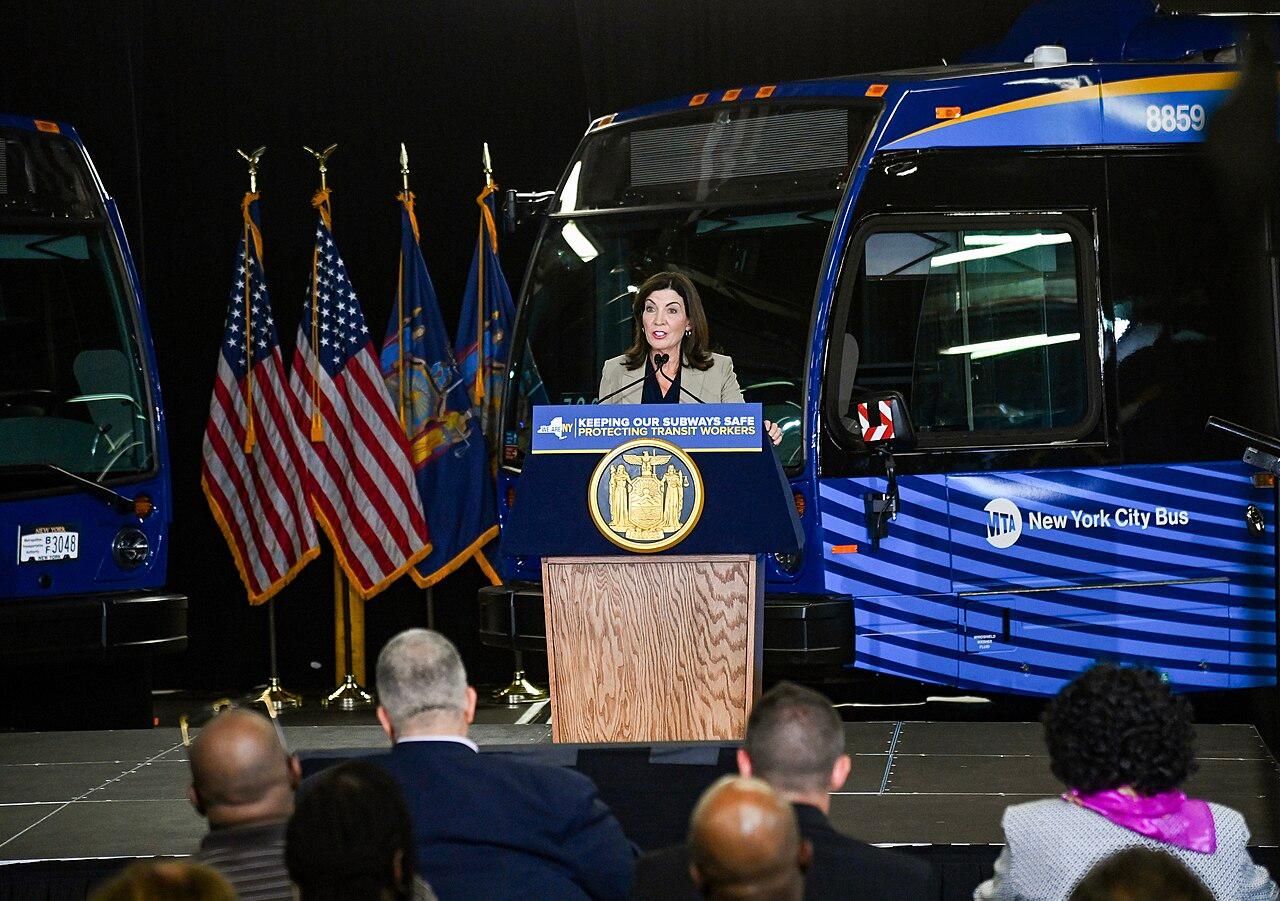
Gov. Kathy Hochul of New York on Friday vetoed a state ban on three food additives, including a red dye that federal regulators have already ordered out of food by mid-January.
The same day, Ms. Hochul, a Democrat, vetoed a bill that would have fined artificial intelligence companies up to $1,000 for each New York user who wasn't told a chatbot's answers "may be inaccurate."
One of the three, potassium bromate, "is often used for pizza and bagels," WXXI News reported. More than 40 business groups, including bakers and the state restaurant association, asked the governor for a veto on Nov. 13.
At stake is who decides what goes into New York's food, and who pays. The bill would have banned three additives: Red No. 3, a cherry-red dye; potassium bromate; and propylparaben. Propylparaben is one of the parabens, a family of preservatives that the Food and Drug Administration (FDA) says is used in foods, drugs and cosmetics.
It also would have made food companies report ingredients they've declared safe on their own, under a federal shortcut called GRAS, for "generally recognized as safe."
"When it comes to New York's famous pizza and bagels, the only thing that should rise is the dough, not the cost," a Hochul spokesperson said in a statement, WXXI News reported. The spokesperson said the bill would "force New York consumers to pay even more for staple groceries and raise costs for taxpayers."
The best case for the bill
The supporters' strongest argument was about disclosure. Consumer Reports calls GRAS a loophole that "lets food companies decide for themselves that a new chemical is safe and add it to food without telling the FDA or the public." It estimates about 1,000 such "secret" substances are already on the market.
"Food companies insist they've done the safety testing already," Jensen Jose, senior regulatory counsel at the Center for Science in the Public Interest (CSPI), an advocacy group, said. "New York lawmakers were just asking them to show their work."
CSPI cites polling that 87% of New Yorkers want fewer harmful chemicals in their food.
Independently owned businesses with 100 or fewer workers would have been exempt from the reporting rules. But the bill went beyond disclosure. In an action to enforce the ban, FDA recognition of any of the three additives as safe "may not be alleged as a defense," the Assembly summary says.
Washington got there first
Under the bill's text, the law would take effect a year after signing and the ban a year after that. Had she signed it Friday, the ban couldn't have started before late 2028.
The FDA has already ordered Red No. 3 out of food by Jan. 15, 2027. California's ban on all three additives, passed in 2023, starts Jan. 1, 2027. In practice, New York's Red No. 3 ban would have arrived nearly two years after the federal one.
The FDA acted under the Delaney Clause, a 1960 provision of federal law that bars approving any additive found to cause cancer in humans or animals. The FDA found it caused cancer in male rats exposed to high levels. Its page adds: "Studies in other animals or in humans did not show the same effect and there is no evidence showing FD&C Red No. 3 causes cancer in humans."
In April 2025, the Trump administration asked food companies to drop six other synthetic dyes, none of them in New York's bill, by the end of 2026.
Dueling price tags
The business coalition wrote that the bill would raise the average household's grocery bill "by approximately $620 per year." CSPI and Tufts researchers estimated a one-time cost of at most $28 per household, even if companies passed on every dollar.
That's a gap of about 22 to 1, and the industry figure repeats every year. Industry put the state's cost at $21 million over three years, a figure Consumer Reports says was drawn from an analysis of a California bill. The New York Senate Finance Committee put the cost of implementation at $250,000, Consumer Reports said, without specifying a time period.
Mr. Jose said the veto let "inflated industry cost claims" stand in the way. The industry and CSPI figures both come from advocates.
The chatbot fine math
The AI bill would have required a notice that a system's outputs "may be inaccurate," with "a civil penalty up to one thousand dollars for each violation." Each user who missed the notice would have counted as a separate violation.
Skipping the notice for 10,000 New York users could mean up to $10 million, or more if each instance counts separately. The bill record doesn't give the governor's reasons for that veto.
What comes next
The food bill passed the Assembly 106 to 32 in April. "We are confident that next session lawmakers will put the health of New Yorkers first," Mr. Jose said.
Lawmakers return to Albany in January. California's ban starts Jan. 1, and the FDA's Red No. 3 deadline hits Jan. 15.
The libertarian take
Opinion, from a libertarian perspective.
Ms. Hochul got this right. A New York Red No. 3 ban arriving nearly two years after Washington's would have added penalties and paperwork, not protection. On potassium bromate and propylparaben, the case is closer, but California bans both starting Jan. 1, almost two years earlier.
Disclosure is a fair ask. Stripping federal approval as a legal defense goes well past asking companies to show their work.
And Albany wanted to price a missing chatbot warning label at up to $1,000 a user.
Sources
- New York State Assembly, S1239F/A1556G, Food Safety and Chemical Disclosure Act, bill text and actions (vetoed Nov. 20, 2026)
- New York State Assembly, S1239F/A1556G, Assembly floor vote (April 21, 2026)
- New York State Assembly, A3411B, generative AI notice bill, text and actions (vetoed Nov. 20, 2026)
- Center for Science in the Public Interest, press release on the veto (Nov. 20, 2026)
- Consumer Reports, statement on Gov. Hochul's veto of the GRAS disclosure bill (Nov. 20, 2026)
- Industry coalition, letter to Gov. Hochul requesting a veto of S1239F, hosted by the Council for Responsible Nutrition (Nov. 13, 2026)
- U.S. Food and Drug Administration, Parabens in Cosmetics
- U.S. Food and Drug Administration, FD&C Red No. 3 page (accessed Nov. 2026)
- California Health and Safety Code section 109025, added by AB 418 (2023)
- U.S. Department of Health and Human Services and FDA, release on phasing out petroleum-based synthetic dyes (April 22, 2025)
- National Governors Association, Gov. Kathy Hochul profile (party: Democratic)
This article was written by AI from a libertarian perspective and checked against the primary sources linked above. Our standards