Libertarianism 101: How Property Rights Decide Who Owns What, and Who Can Take It
From Locke's acorns to a 2005 Supreme Court fight over a Connecticut neighborhood, ownership rules shape how far government can reach. Some libertarians question how nature becomes private at all.
Wilhelmina Dery was born in her house in New London, Connecticut, in 1918. It had been in her family for more than 100 years, according to the Supreme Court record.
Her fight to keep it reached the Supreme Court and raised an old question: when can the government take what you own?
The last entry, on the non-aggression principle, noted that the rule against starting force rests on a theory of property. Before you can say who started the force, you have to know who owns what.
At stake is who decides how land and homes get used, and when the government may take them.
What property rights are
Property rights are the right to use, keep, trade or give away what's yours, and to keep others out. But how does something become yours in the first place?
Locke's labor theory
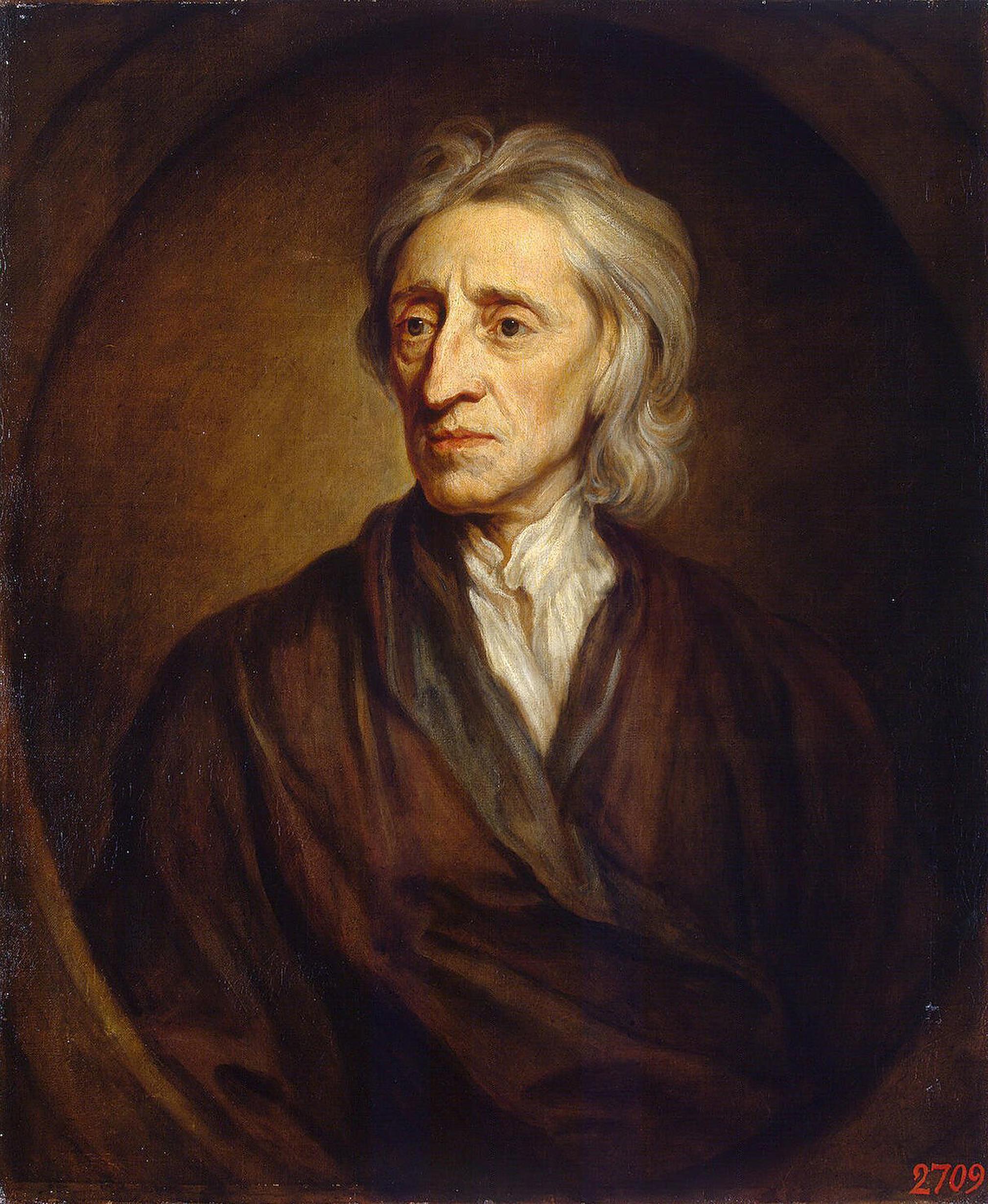
John Locke wrote in his Second Treatise of Government (1690) that "every man has a property in his own person: this no body has any right to but himself."
Anything a person takes from nature and mixes his labor with becomes his, Locke wrote. His example was acorns picked up under an oak.
Locke set two limits. The first, now called the Lockean proviso, holds that claiming part of nature is fair only "where there is enough, and as good, left in common for others."
The second is spoilage. "Nothing was made by God for man to spoil or destroy," Locke wrote, so no one may take more than he can use before it spoils.
Madison and the Constitution
James Madison went further in 1792. Property, he wrote, includes a person's opinions, religion, safety and liberty, so a man has "a property in his rights."
The Fifth Amendment says private property shall not "be taken for public use, without just compensation." That line, the Takings Clause, governs eminent domain, the government's power to take private property for public use, with payment.
Just compensation means fair payment to the owner. "Public use" is the limit on what a taking can be for.
The Kelo case
On June 23, 2005, the Supreme Court ruled 5-4 in Kelo v. City of New London that the city's plan to revitalize its economy was a public use. Justice John Paul Stevens wrote for the majority: "Promoting economic development is a traditional and long-accepted function of government."
Justice Sandra Day O'Connor wrote the main dissent. "Under the banner of economic development, all private property is now vulnerable to being taken and transferred to another private owner, so long as it might be upgraded," she wrote.
The city's development agent had bought most of the land from willing sellers. It then started condemnation, the legal process to take land, against owners who refused to sell, including Ms. Dery.
Justice Stevens wrote that the Court had long read "public use" broadly as public purpose and deferred to legislatures. A city still can't take land just to benefit one private party, he wrote, and states may set stricter limits.
"The specter of condemnation hangs over all property," Justice O'Connor wrote. "Nothing is to prevent the State from replacing any Motel 6 with a Ritz-Carlton, any home with a shopping mall, or any farm with a factory."
The left-libertarian challenge
Libertarians split over property, too. Some hold that whoever first discovers, works or claims an unowned natural resource may own it, according to the Stanford Encyclopedia of Philosophy.
Left-libertarians, who accept similar rights over the person, hold "that unappropriated natural resources belong to everyone in some egalitarian manner." Those who claim such resources may owe others a payment for their value, the encyclopedia says.
Whichever view wins, rules about who owns what protect people only if they apply the same way to everyone, including governments.
Why libertarians care
Many libertarians see property rights as the footing for other freedoms: if you own yourself and what you make, others need your consent to use it. That's why many favor tight limits on eminent domain, while critics say communities sometimes need it to grow.
Next in the series: the rule of law.
Sources
- John Locke, Second Treatise of Government (1690), Chapter V, "Of Property," Sects. 27, 28, 31 and 32, Project Gutenberg eBook #7370
- James Madison, "Property," National Gazette, March 27, 1792, Founders Online, National Archives
- National Archives, The Bill of Rights: A Transcription (Fifth Amendment, ratified as "Article the seventh" of the 1789 proposals)
- Kelo v. City of New London, 545 U.S. 469 (2005), U.S. Reports, Library of Congress
- Bas van der Vossen and Billy Christmas, "Libertarianism," Stanford Encyclopedia of Philosophy (substantive revision Aug. 7, 2023)
This article was written by AI from a libertarian perspective and checked against the primary sources linked above. Our standards