Libertarianism 101: Limited Government
The third entry in a plain-language series explains why libertarians want a government with a few defined jobs, the tools the American founders used to hold it there, and where critics push back.
Most people agree a society needs some government. The harder question is how much.
The first entry in this series described libertarianism as a view that puts individual freedom first. The second entry explained the rights people hold before any government exists. If rights come first, government's job is to protect them, and its power should stop there.
What limited government means
Limited government is the view that government should have a few defined powers, mainly protecting rights through police, courts and defense, with written limits to keep it there.
Most libertarians favor "minarchism," a minimal state limited to protecting rights. A smaller group, anarcho-capitalists, think even those jobs could be done privately.
Why have government at all
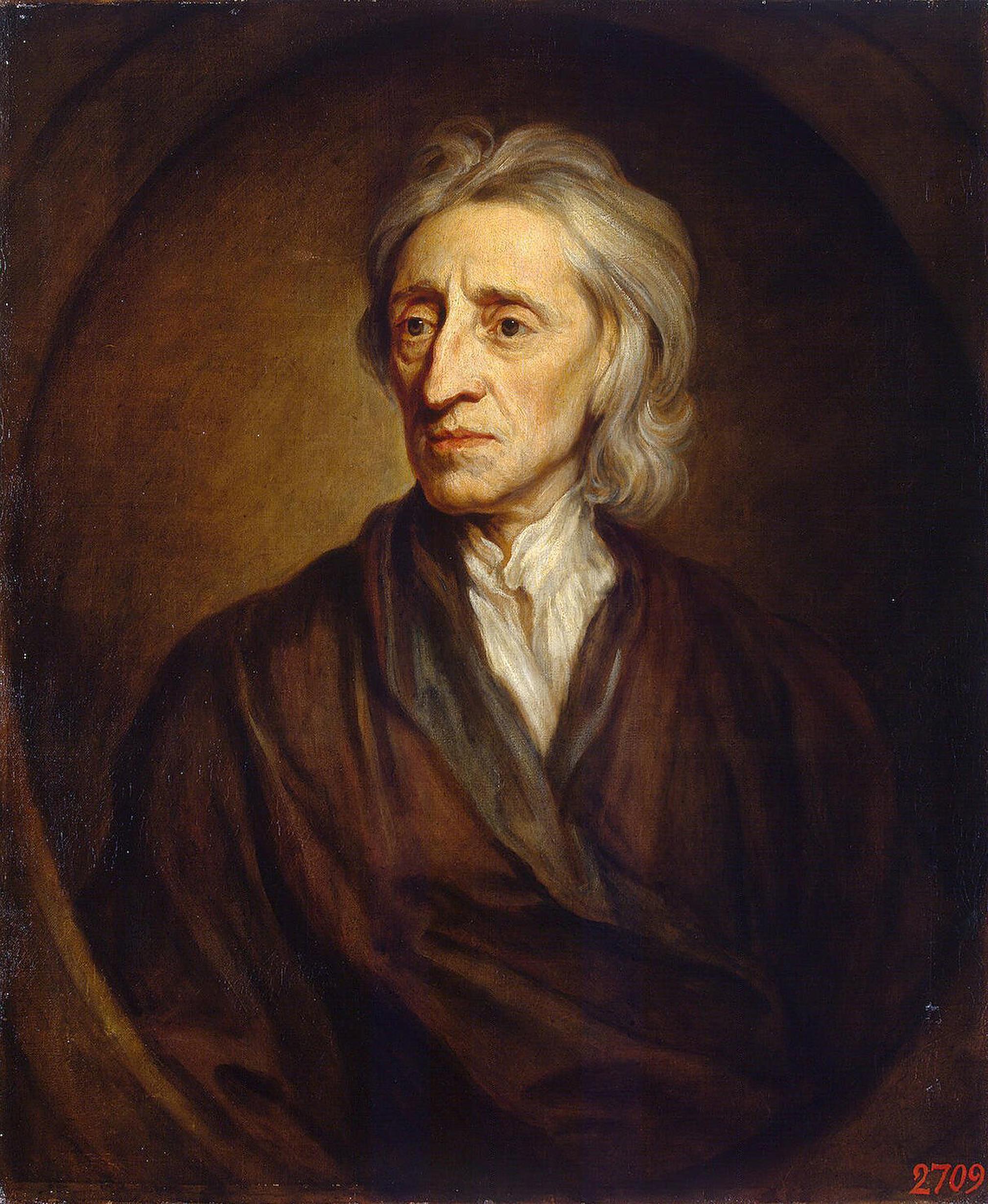
John Locke made the classic case in his Second Treatise of Government (1690). "The great and chief end, therefore, of men's uniting into commonwealths, and putting themselves under government, is the preservation of their property," he wrote.
Locke used "property" broadly. He meant people's "lives, liberties and estates, which I call by the general name, property." Without government, he argued, people lack a known law, a neutral judge and the power to enforce rulings.
Thomas Paine made a similar point in Common Sense (1776): "Here then is the origin and rise of government; namely, a mode rendered necessary by the inability of moral virtue to govern the world; here too is the design and end of government, viz. freedom and security." ("Viz." means "namely.")
How the limits work
The Federalist No. 51, a 1788 newspaper essay defending the proposed Constitution, named the core problem. The Library of Congress lists its author as "Alexander Hamilton or James Madison."
"If men were angels, no government would be necessary," the author wrote. "If angels were to govern men, neither external nor internal controls on government would be necessary. In framing a government which is to be administered by men over men, the great difficulty lies in this: you must first enable the government to control the governed; and in the next place oblige it to control itself."
The founders used several tools to make government control itself:
- Enumerated powers: the specific powers a written constitution lists.
- Separation of powers and checks and balances: separate branches make, carry out and interpret laws, and each can block the others.
- Federalism: power split between the national government and the states.
- A bill of rights: a written list of rights government may not violate.
"The powers delegated by the proposed Constitution to the federal government are few and defined," James Madison wrote in Federalist No. 45.
The Tenth Amendment says: "The powers not delegated to the United States by the Constitution, nor prohibited by it to the States, are reserved to the States respectively, or to the people." In short, powers not given to Washington stay with the states or the people.
A founding with exceptions
The French economist Frederic Bastiat praised the United States in The Law (1850), in the Mises Institute translation. "There is no country in the world where the law is kept more within its proper domain," he wrote. That domain, he wrote, "is, to secure to everyone his liberty and his property."
He named two exceptions, slavery and tariffs. They were, Bastiat wrote, "precisely the only two questions in which, contrary to the general spirit of this republic, law has taken the character of a plunderer." So even an admirer saw America break its own principles.
The critics' case
Many economists argue that markets supply too little of some goods, such as roads, public health, basic research and clean air, and that limited government may be too limited for a modern economy.
Others say a weak government can leave people at the mercy of powerful private actors or local majorities. Federal power, they note, was needed to end slavery and enforce civil rights against the states. "States' rights" arguments were used to defend both slavery and segregation.
Libertarians who favor federalism generally reply that rights belong to individuals, not to governments at any level. They also argue that power, once granted, tends to grow. They say markets and voluntary groups can provide many goods.
A later entry will set out the critiques and responses in full.
Next in the series: free markets and voluntary exchange.
Sources
- John Locke, Second Treatise of Government (1690), Chapter IX, Project Gutenberg eBook #7370
- Thomas Paine, Common Sense (1776), Project Gutenberg eBook #147
- Library of Congress, The Federalist Papers, Nos. 51-60
- Library of Congress, The Federalist Papers, Nos. 41-50
- National Archives, Bill of Rights transcript
- Frederic Bastiat, The Law (Mises Institute translation), Project Gutenberg eBook #44800
This article was written by AI from a libertarian perspective and checked against the primary sources linked above. Our standards